English Language
English Language
VISION AND MISSION
Vision: Every Xishanite, a Confident and Competent Communicator

Mission: To develop the confidence, passion and love for the English Language in our pupils
STELLAR PROGRAMME (Strategies for English Language Learning And Reading)
The programme aims to strengthen both language and reading skills as well as promote a positive attitude towards reading in the foundational years through the use of well-established, learner-centred and developementally appropriate pedagogical approaches using authentic children’s literature. At the heart of the STELLAR programme is the belief that enjoyment is a fundamental aspect of shared reading and writing experiences.
Aligned with the English Language Syllabus 2020, our teaching approach emphasises multiliteracies, metacognition and inquiry through dialogue. Digital tools and authentic contexts are woven into lessons where beneficial, enhancing the educational experience and enabling students to recognise how their learning applies to life outside school.
Our English Language classroom experiences are structured to cultivate students as:
-
Empathetic Communicators who possess the values, dispositions and skills to listen actively and engage respectfully with diverse perspectives
-
Discerning Readers who possess broad worldviews by staying well informed, reflective and self-directed in their use of information; and are able to distinguish fact from falsehood
-
Creative Inquirers who approach learning with curiosity, explore ideas deeply and evaluate real-world issues from multiple perspectives.
MOE PROGRAMMES AND INITIATIVES
Lower Primary STELLAR Programme:
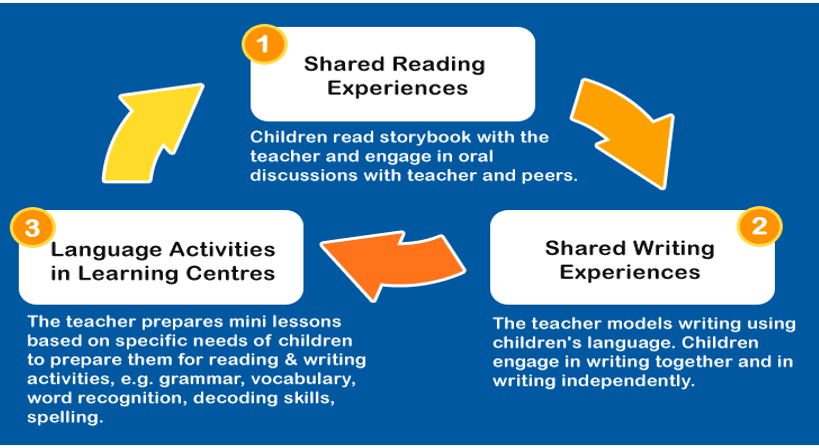
The Lower Primary strategies include:
The lower primary strategies include the Shared Book Approach (SBA) and Modified Language Experience Approach (MLEA), as well as the use of Learning Centres (LC). Students have the opportunity to re-learn, revisit or extend what they have learnt at their own pace and in differentiated ability groups.
Upper Primary STELLAR Programme:
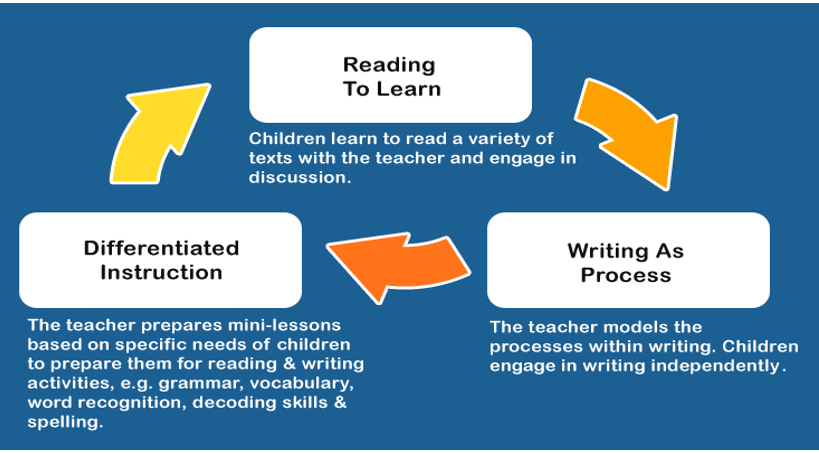
At the upper primary levels, STELLAR emphasises enhancing reading and writing competencies through inquiry-driven approaches including Supported Reading (SR), KWL (Know-Want to know-Learnt), and the Writing Process Cycle (WPC). The programme transitions from basic literacy development to cultivating analytical thinking, text comprehension, and meaningful interaction with sophisticated literature and contemporary issues.
1. Learning Support Programme (LSP)
Founded on the principle that every child can achieve success at their individual learning pace, the Learning Support Programme offers additional assistance to selected students in fundamental literacy competencies, enabling them to participate effectively in mainstream classroom learning. This specialised early intervention initiative targets students who begin Primary 1 with limited English language and literacy abilities. Student selection for LSP occurs through a comprehensive screening methodology implemented at the start of Primary 1.
2. School-based Dyslexia Remediation Programme (SDR)
The School-based Dyslexia Remediation Programme represents a two-year support initiative designed for Primary 3 and 4 students. Participants are selected through a thorough dyslexia screening procedure conducted at the end of Primary 2. Trained school staff facilitate the programme in small group settings, utilising a specialised remediation curriculum developed by MOE Reading Specialists.
3. Reading Remediation Programme (RRP)
The Reading Remediation Programme supports Primary 3, 4 and 5 students requiring additional reading assistance in English Language. This initiative introduces students to various strategies for reading comprehension, word identification and oral reading fluency, equipping them with skills to navigate their daily academic requirements more effectively.
XISHAN PROGRAMMES AND INITIATIVES
Reading Passport
The reading passport transforms reading into an exciting journey through engaging post-reading activities that build critical thinking skills and celebrate literary achievements. This motivational framework encourages consistent reading habits and fosters a genuine love for reading that extends beyond classroom requirements, creating lifelong readers.
The Straits Times Little Red Dot Subscription for P5 and P6 students
This publication exposes students to current affairs through age-appropriate journalism, fostering informed citizenship and analytical thinking. Classroom discussions following these readings develop students' ability to articulate opinions and understand the relevance of current events to their lives.
Termly Library Visits and NLB Book Buzz Sessions
Regular library visits help students explore diverse genres and develop independent book selection skills. NLB Book Buzz sessions bring professional librarians who introduce new authors, genres, and reading strategies through interactive presentations.
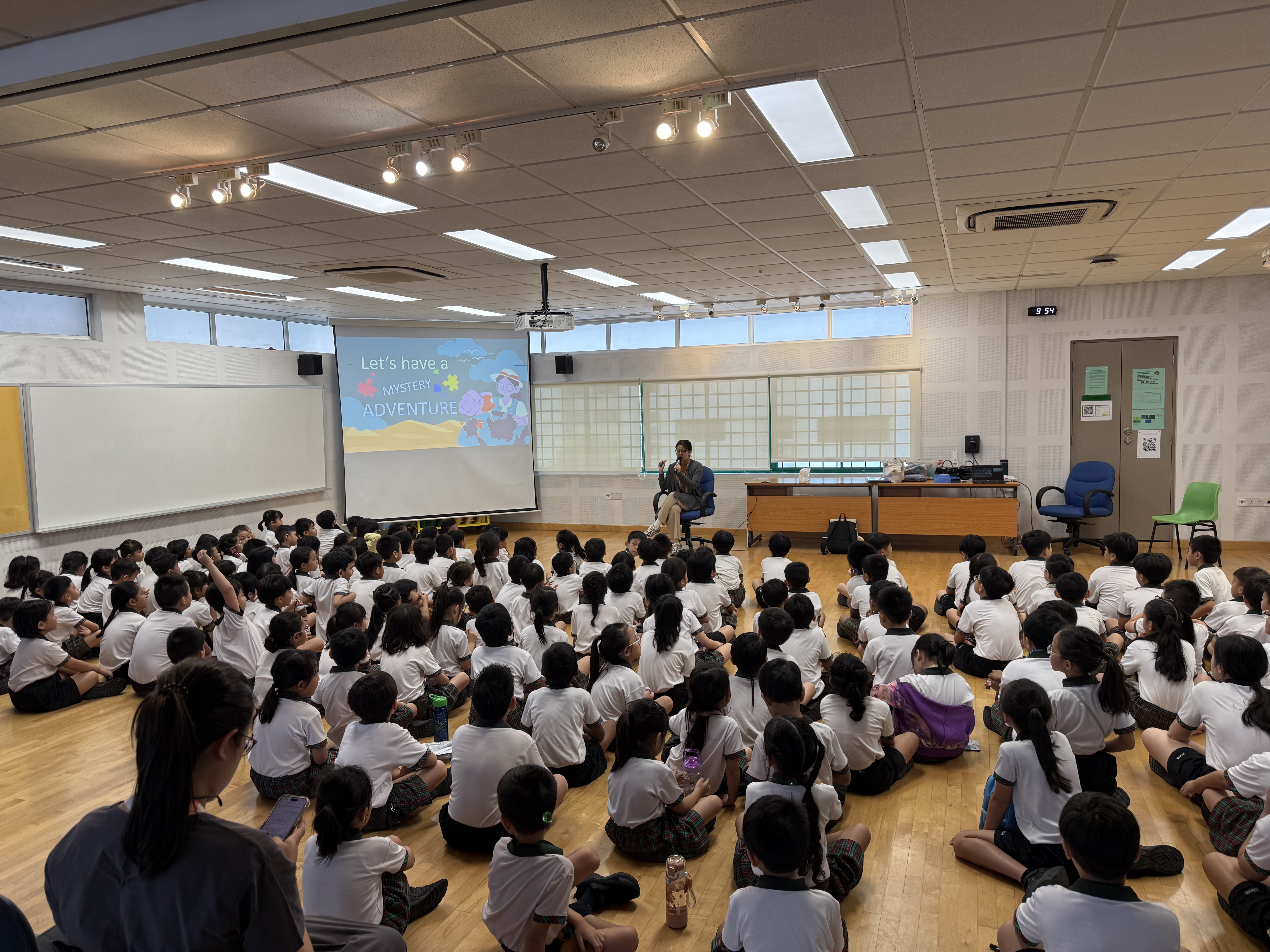
Book-to-Movie Adaptation Parent-Child Bonding Workshop for P1 students
This workshop demonstrates effective reading engagement strategies as parents observe storytelling sessions followed by film adaptations. Parents gain practical insights into pre-reading, active reading, and post-reading discussion techniques, equipping them to support their children's reading journey at home.
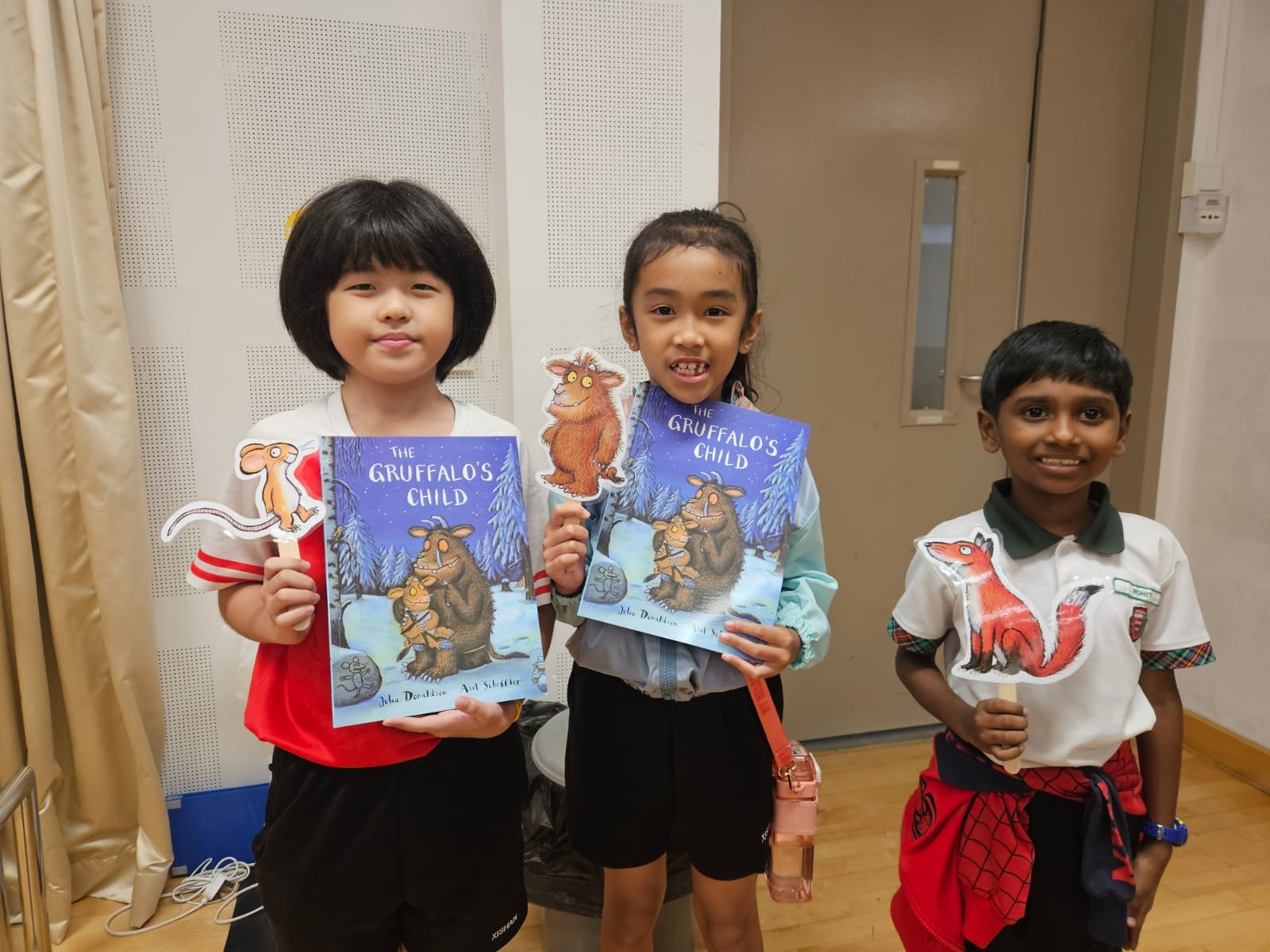
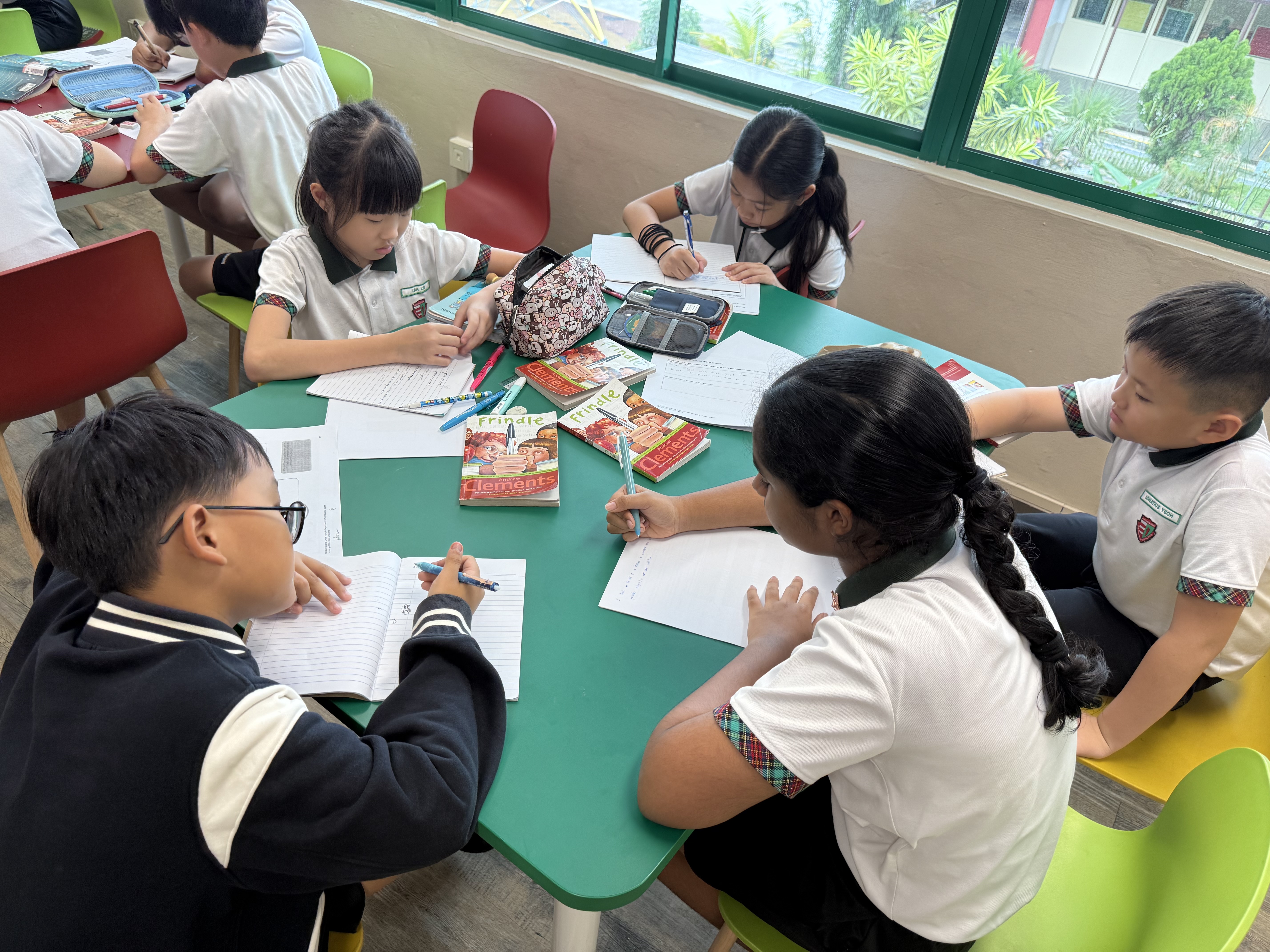
Reading Circles is provision for advanced readers, specifically designed to encourage students to take an active role in their reading experience, foster a love for reading and enhance critical thinking skills among our students. Additionally, the programme encourages independent reading habits and cultivates a commitment to lifelong learning.
P1 Garden Learning Trail
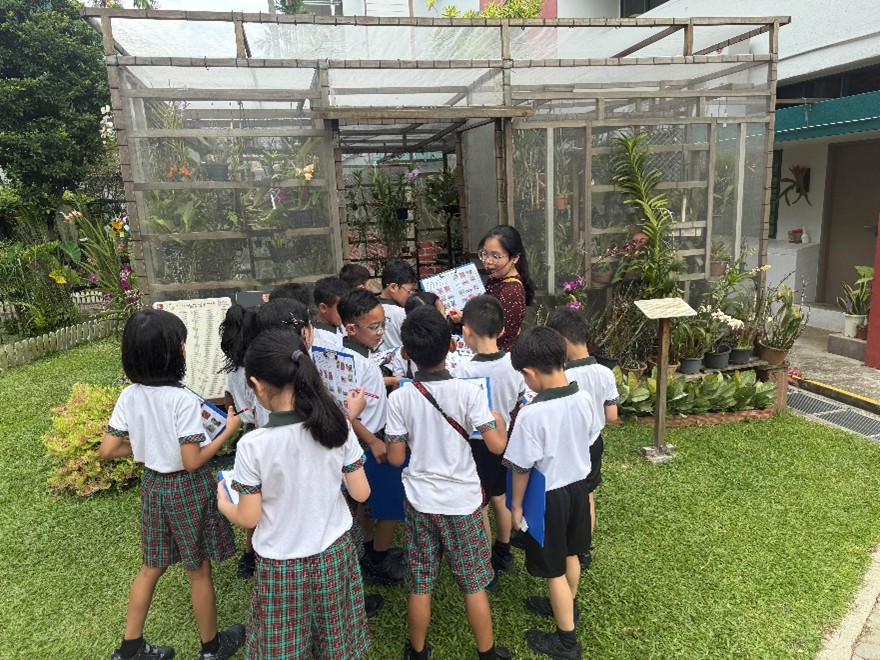
The P1 Garden Learning Trail, organised for Primary 1 students, is a Field-Based Learning experience featuring a collaborative initiative between the Social Studies, Green Movement, and English departments.
This interdisciplinary experience aims to help students understand their relationship with places and develop care for shared spaces whilst building essential values such as respect, care, and responsibility through Social Studies learning. This programme raises awareness about sustainability and supporting biodiversity, encouraging eco-conscious behaviour and fostering respectful treatment of plants and animals. Students develop their oral and written language skills through careful observation and description activities, expanding their vocabulary related to plants, animals, and emotions while engaging in reflective writing or drawing exercises that capture their learning experience within the school environment.